Commercial properties depend on strong concrete structures to support daily operations, heavy equipment, and consistent foot traffic. Across the Bay Area, businesses developing warehouses, industrial facilities, retail spaces, and office buildings need concrete work that meets specific structural and performance requirements. Poor planning, inadequate site preparation, or unsuitable materials can create surface problems and costly repairs later.
Successful Building Concrete projects require careful coordination from the initial site assessment through pouring and finishing. OREBEND BLDRS INC provides commercial and industrial concrete solutions, including foundation slabs, equipment pads, walkways, structural pours, and repairs to existing concrete. Its approach focuses on site preparation, formwork, quality materials, and durable finished surfaces.
1. Evaluate the Commercial Building’s Concrete Requirements
Every commercial construction project has different structural and operational demands. Before concrete work begins, contractors need to understand how the finished surface or structure will be used.
For example, a warehouse floor may need to support heavy equipment and frequent vehicle movement, while an equipment pad must provide a stable foundation for machinery. Commercial walkways require appropriate dimensions, drainage considerations, and a suitable finish for regular pedestrian use.
Important planning considerations include:
- Intended use: Identify whether the concrete will support equipment, vehicles, pedestrians, or structural components.
- Load requirements: Determine expected loads and confirm the necessary specifications with the project engineer.
- Site conditions: Evaluate soil conditions, existing structures, drainage, and accessibility.
- Project dimensions: Establish the required slab thickness, layout, elevation, and overall dimensions through the approved design.
- Environmental exposure: Consider moisture, temperature changes, and other conditions that may affect concrete performance.
Early planning helps prevent design conflicts and ensures that the concrete installation supports the building’s intended function.
2. Complete Proper Site Preparation
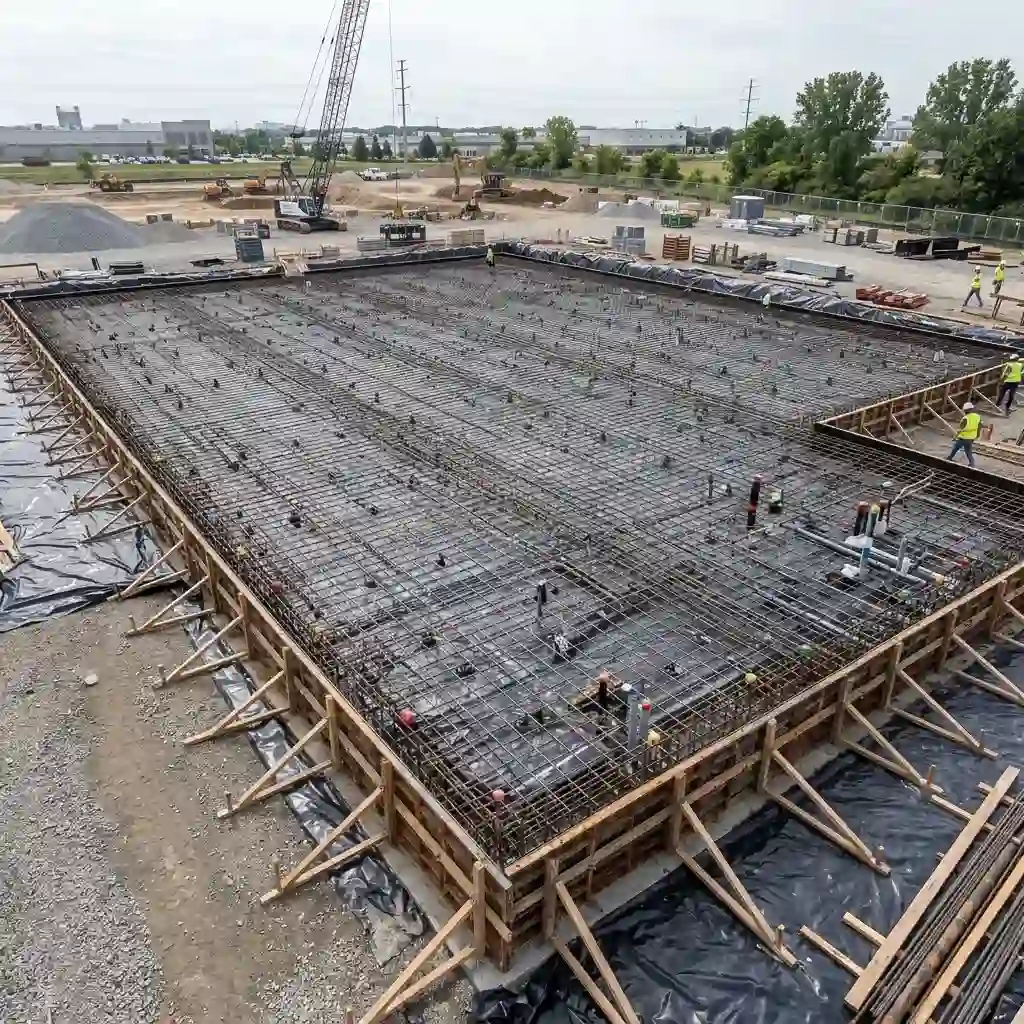
Site preparation is one of the most important stages of commercial concrete construction. Even high-quality concrete can develop problems if the underlying area is not properly prepared.
The preparation process generally involves clearing the work area, evaluating the existing ground, establishing elevations, and preparing the required base according to the project specifications.
Assess Ground and Drainage Conditions
The site should be evaluated for soil stability, existing drainage patterns, and potential water accumulation. Poor drainage can contribute to erosion, moisture-related issues, and movement beneath concrete surfaces.
Where necessary, the project team coordinates grading and drainage requirements with the relevant construction professionals.
Prepare and Compact the Base
The supporting base must be suitable for the planned concrete application. Its composition, depth, and compaction requirements depend on engineering specifications and site conditions.
Professional preparation helps establish a more consistent foundation for the concrete placement.
Coordinate Site Access
Commercial projects often involve multiple contractors, equipment, deliveries, and construction activities. Planning access routes and work areas helps reduce delays and maintain a more organized construction schedule.
3. Install Accurate Formwork
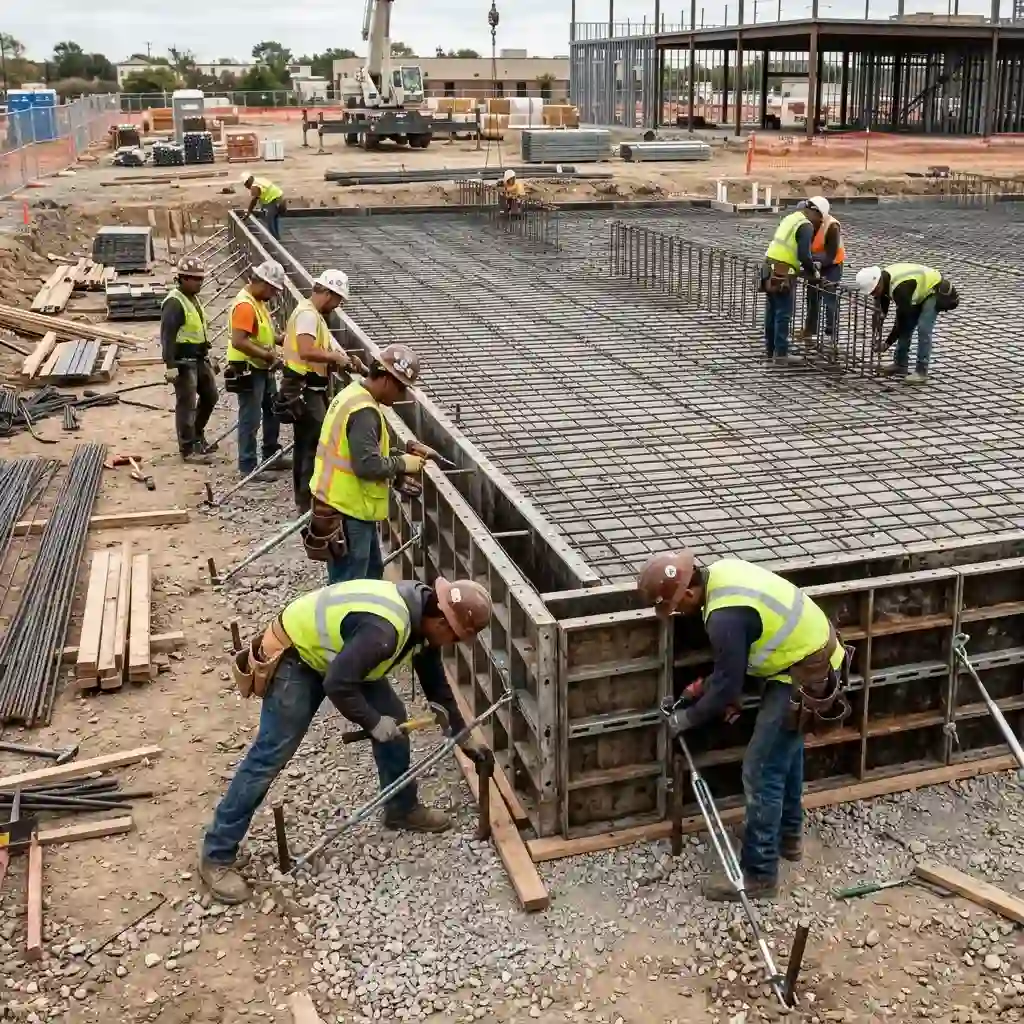
Formwork creates the shape and boundaries of a concrete pour. It helps maintain the intended dimensions, alignment, and elevation while the concrete is placed and gains sufficient strength.
For commercial building concrete projects, formwork must be designed around the approved drawings and expected concrete pressures.
Key considerations include:
- Accurate measurements and layout.
- Appropriate form materials and support systems.
- Secure connections and bracing.
- Correct elevations and finished dimensions.
- Coordination with reinforcement and embedded components.
Incorrectly positioned or poorly supported formwork can lead to uneven edges, dimensional inconsistencies, and additional corrective work.
4. Select Suitable Concrete Materials
Concrete specifications should reflect the project’s structural requirements and operating environment. Commercial buildings may require different concrete mixes depending on the intended application, exposure conditions, and engineering design.
Material selection should account for factors such as:
- Required compressive strength.
- Aggregate size and characteristics.
- Water-to-cement ratio.
- Workability and placement requirements.
- Exposure to moisture, chemicals, or temperature changes.
Reinforcement may also be required to help manage tensile stresses and control cracking, depending on the design. The placement and type of reinforcement should follow approved engineering specifications.
OREBEND BLDRS INC emphasizes high-quality materials and proven techniques for its commercial and industrial concrete services. This focus supports the company’s goal of delivering level surfaces designed for demanding use.
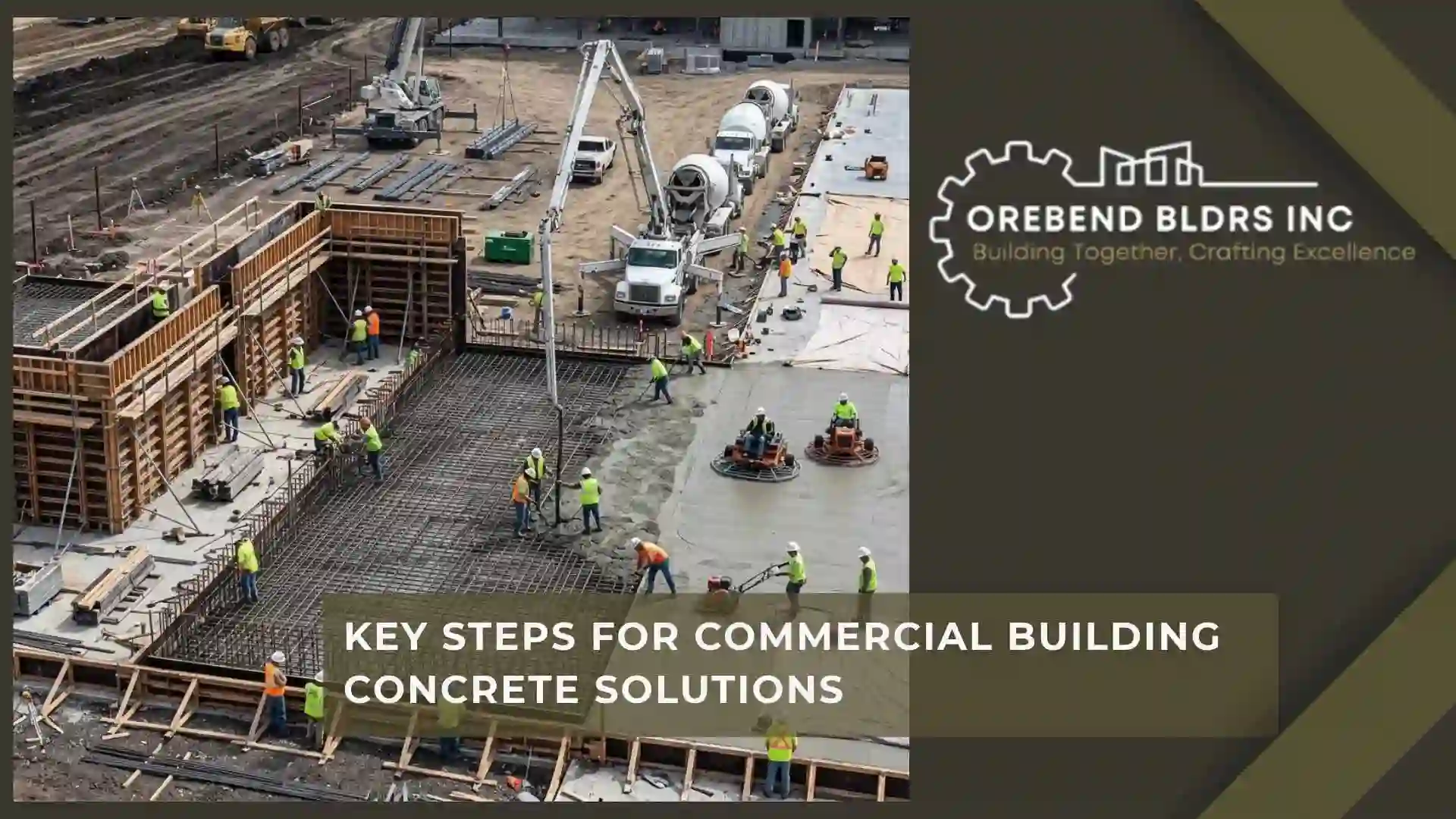
5. Coordinate Concrete Pouring and Placement
Concrete placement requires careful scheduling and coordination. Delays between deliveries, inconsistent placement, or inadequate preparation can affect the quality of the finished work.
Before pouring begins, the project team should confirm that formwork, reinforcement, access, equipment, and inspection requirements are ready.
During placement, important considerations include:
- Maintaining a coordinated delivery schedule.
- Distributing concrete according to the approved placement plan.
- Using suitable equipment and methods for the project.
- Managing joints and transitions according to the design.
- Monitoring placement conditions and workmanship.
For large commercial projects, coordination is especially important because concrete work may need to fit around other construction activities and operational deadlines.
6. Focus on Professional Concrete Finishing
Finishing determines the final appearance and surface characteristics of concrete. Commercial buildings may require different finishes depending on whether the area will serve as a warehouse floor, equipment foundation, entrance, or pedestrian walkway.
A properly planned finishing process helps create surfaces with the required levelness, texture, and functionality.
Achieve the Required Surface Level
Commercial floors and equipment pads may require specific elevation and flatness tolerances. These requirements should be established by the project specifications rather than assumed to be identical for every application.
Apply an Appropriate Surface Finish
The finish should match the intended use. A walkway, for example, may require a different texture from an interior industrial floor.
Follow Proper Curing Requirements
Concrete needs appropriate curing conditions to develop its intended properties. The curing method and duration depend on the mix, project specifications, and environmental conditions.
Rushing this stage can compromise performance. Professional project coordination helps ensure that curing and access restrictions are properly managed.
7. Inspect and Repair Existing Concrete
Not every commercial concrete project involves new construction. Existing buildings may need repairs when floors, walkways, foundations, or equipment pads develop visible damage.
Common issues include:
- Surface cracking and deterioration.
- Uneven or damaged concrete sections.
- Spalling and surface scaling.
- Settlement-related movement.
- Deterioration around joints and edges.
The correct repair approach depends on the cause and extent of the damage. Surface-level repairs may be appropriate for some conditions, while structural concerns require further assessment by qualified professionals.
OREBEND BLDRS INC provides repairs to existing concrete as part of its commercial and industrial concrete solutions. Addressing problems with an appropriate repair plan can help reduce disruption and support the continued use of a commercial property.
Job Story: Planning a Commercial Equipment Pad
The following is an illustrative scenario, not a documented OREBEND BLDRS INC customer project.
Imagine a Bay Area manufacturing facility preparing to install new production equipment. The machinery requires a stable concrete pad designed around its dimensions, operating loads, and installation requirements.
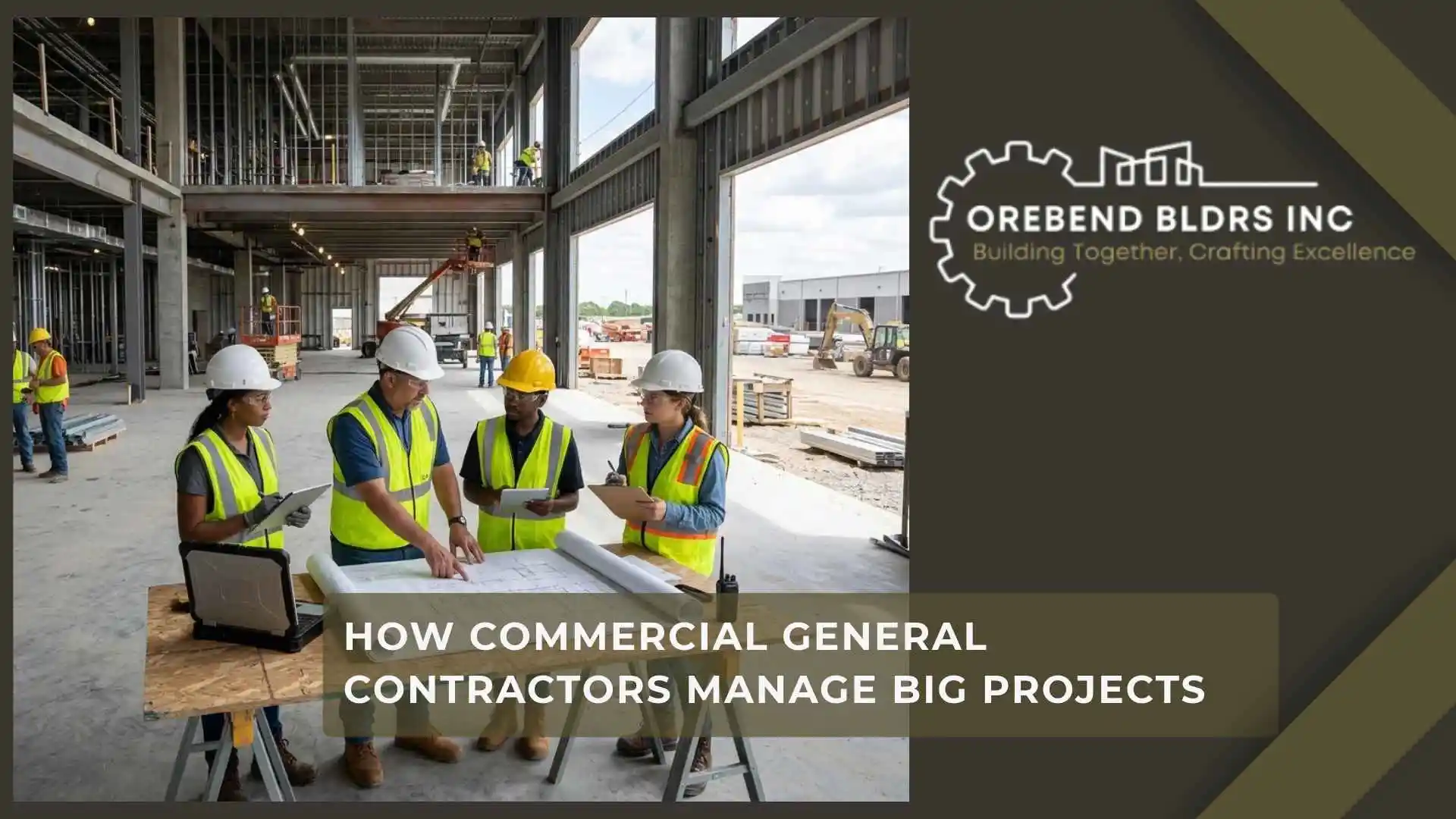
The facility’s project team first reviews the equipment specifications and coordinates the required foundation design. Site preparation follows, including ground assessment, layout, and formwork installation.
The concrete placement is then scheduled around the facility’s other construction activities. Once the concrete is placed and finished, the team follows the specified curing requirements before the equipment installation proceeds.
This example highlights why commercial concrete work needs coordination between contractors, engineers, equipment suppliers, and property owners. A properly planned foundation helps provide the support required for the intended application.
Why Choose Professional Building Concrete Solutions?
Commercial concrete construction requires specialized equipment, technical planning, and careful execution. Mistakes during preparation, placement, or finishing can affect the usability and long-term performance of the finished structure.
OREBEND BLDRS INC offers concrete services tailored to commercial and industrial applications. Its work includes foundation slabs, equipment pads, walkways, structural pours, site preparation, formwork, pouring, finishing, and repairs to existing concrete.
The company also provides broader commercial construction capabilities and coordinates with architects, engineers, and subcontractors on construction projects.
Its team serves businesses and property owners across the Bay Area, including San Francisco, San Jose, San Rafael, Santa Clara, Sunnyvale, Oakland, Berkeley, and Modesto.
For commercial property owners, working with a contractor who understands project coordination and concrete requirements can help keep construction organized and focused on the intended results.
Frequently Asked Questions
1. What are the main steps in commercial building concrete work?
The process generally includes project assessment, site preparation, formwork installation, material selection, concrete placement, finishing, and curing. The exact requirements depend on the structure and engineering specifications.
2. What types of commercial concrete projects does OREBEND BLDRS INC handle?
The company lists foundation slabs, equipment pads, walkways, structural pours, and repairs to existing concrete among its commercial and industrial concrete services.
3. Why is site preparation important before pouring concrete?
Proper site preparation establishes a suitable supporting base, addresses drainage and ground conditions, and helps achieve the required elevations and dimensions.
4. How long does commercial concrete take to cure?
Curing requirements vary according to the concrete mix, environmental conditions, and project specifications. The concrete should not be placed into service until it meets the applicable strength and project requirements.
5. Can damaged concrete in an existing commercial building be repaired?
Yes. The appropriate repair depends on the type, cause, and severity of the damage. Structural problems may require assessment by a qualified engineer before repairs proceed.
6. How can businesses request commercial concrete services?
Businesses can contact OREBEND BLDRS INC by phone or through its website to discuss project requirements and request a quote or consultation.
Plan Your Commercial Concrete Project with OREBEND BLDRS INC
Strong commercial structures begin with careful planning and dependable construction work. From foundation slabs and equipment pads to walkways and existing concrete repairs, each stage plays an important role in achieving a durable result.
OREBEND BLDRS INC provides commercial and industrial concrete solutions throughout the Bay Area, with services covering preparation, formwork, pouring, finishing, and repairs.
Call OREBEND BLDRS INC at (415) 218-6187 to discuss your building concrete requirements and request a project consultation.