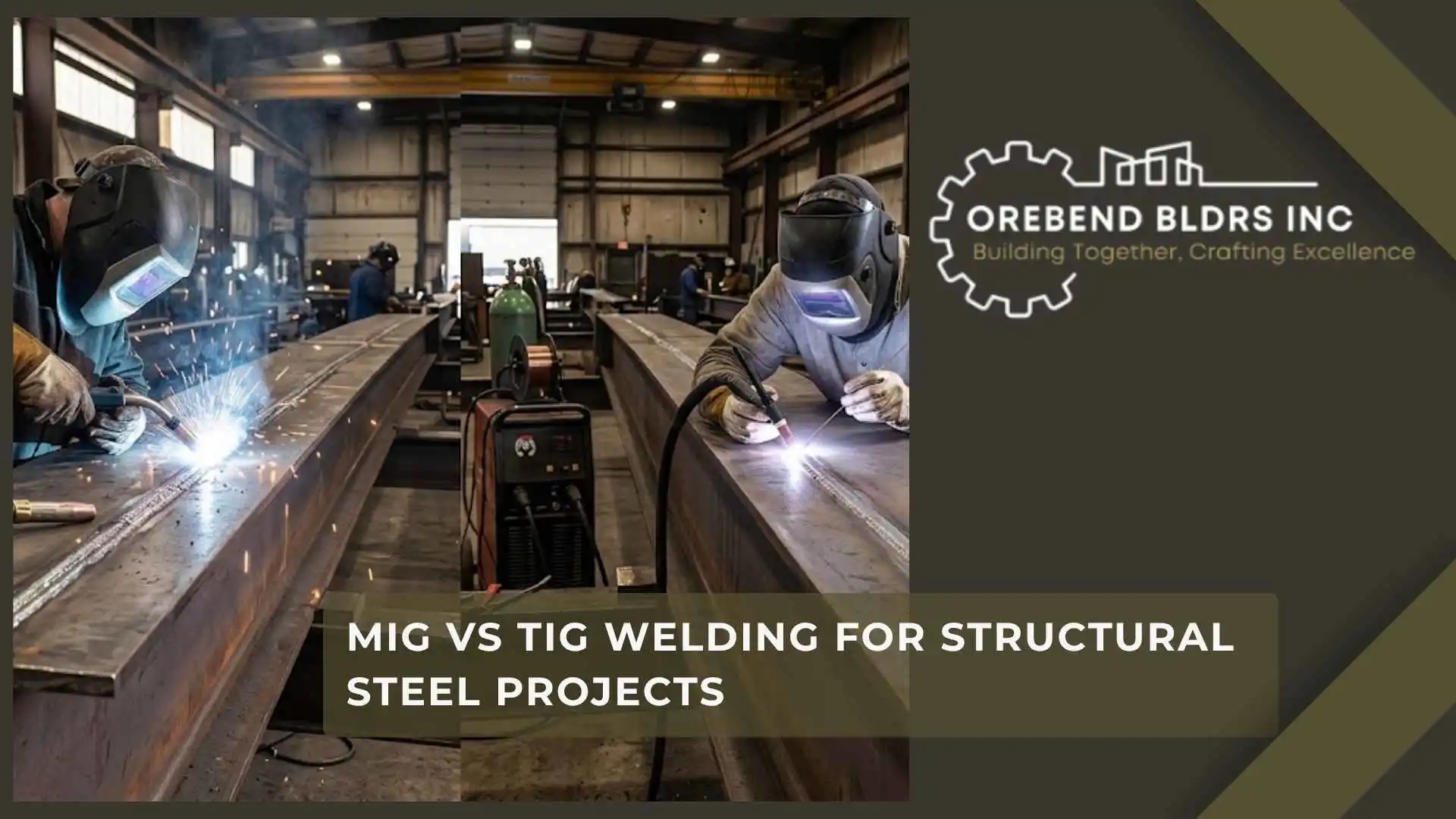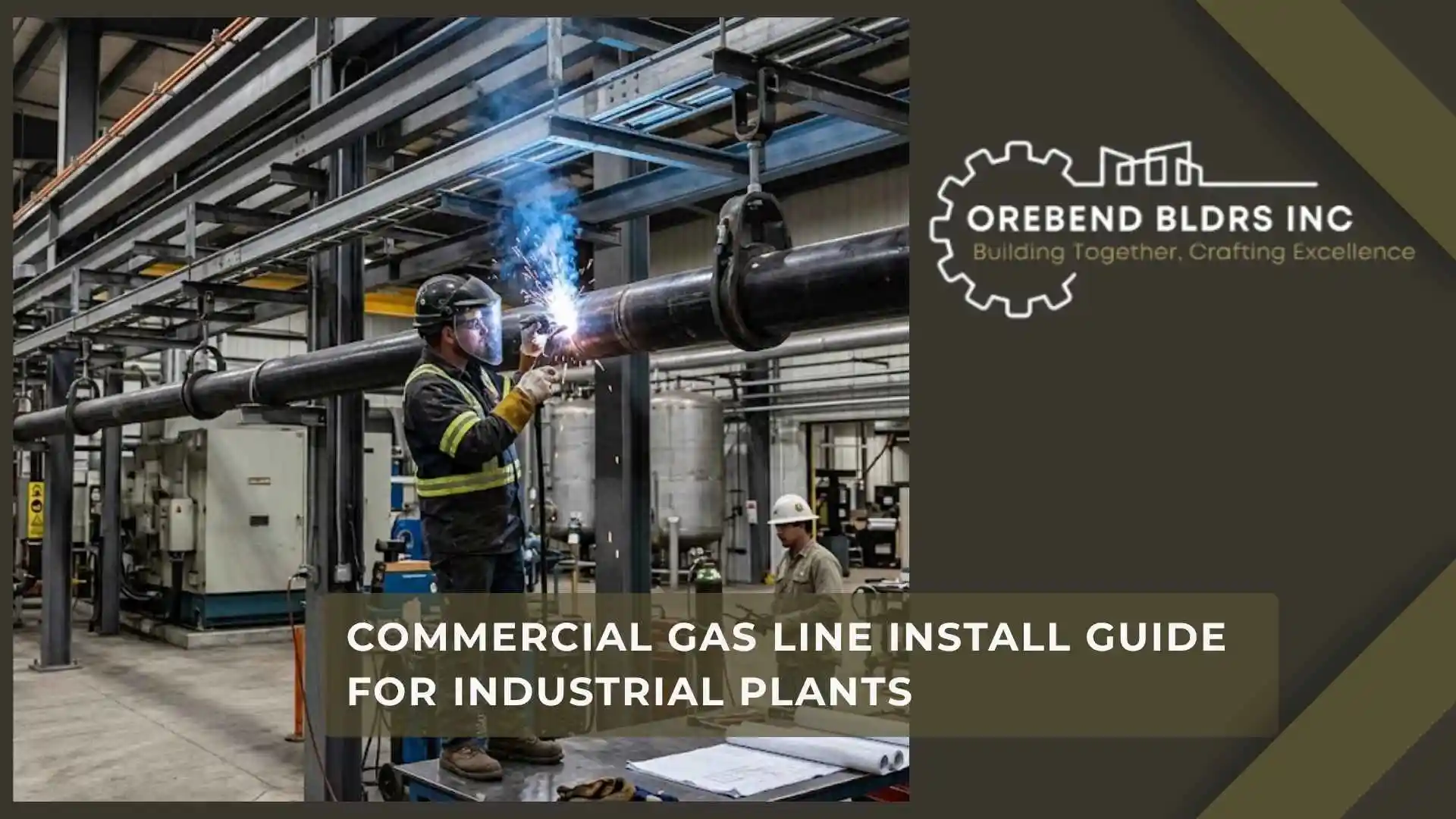
Structural steel projects require strong, accurate welds because the quality of each connection can affect the stability, durability, and performance of the finished assembly. When comparing TIG Welding and MIG welding, the right choice depends on the steel, joint design, thickness, project requirements, and desired finish.
MIG and TIG are both established welding processes, but they serve different purposes. MIG welding is generally valued for speed and productivity, while TIG welding provides greater control and precision. For structural work, however, the welding process should always be selected by a qualified professional based on engineering requirements rather than simply choosing the process that appears easiest.
OREBEND BLDRS INC provides welding and fabrication services, including MIG, TIG, Stick, certified welding, and certified structural steel welding. Its welding capabilities cover structural applications as well as detailed work across different materials.
What Is MIG Welding?
MIG welding uses a continuously fed wire electrode and shielding gas to create the weld. One of its major advantages is productivity.
Because the welding wire feeds continuously, experienced welders can complete many joints efficiently. This makes MIG particularly useful when a project involves multiple structural connections or larger amounts of fabrication.
MIG welding can be suitable for applications where:
- Productivity is important
- Steel components are relatively thick
- Multiple welds are required
- Consistent deposition is needed
- Fabrication efficiency matters
- The project involves larger structural assemblies
For commercial and industrial fabrication, this efficiency can help keep production moving while maintaining the required quality when performed by qualified welders.
OREBEND BLDRS INC handles structural welding and custom steel fabrication, with its broader services covering structural components, frames, supports, and custom steel assemblies.
What Is TIG Welding?
TIG welding uses a non-consumable tungsten electrode and gives the welder precise control over the welding arc.
That control makes TIG particularly useful when accuracy, appearance, and careful heat management are important.
TIG Welding is commonly associated with:
- Precise weld control
- Clean, detailed welds
- Thin or sensitive materials
- High-quality visible finishes
- Complex joints
- Applications where heat input must be carefully controlled
TIG can require more time and skill than faster welding processes. For that reason, it is not automatically the best choice simply because it produces a highly controlled weld.
The correct process depends on the specific project.
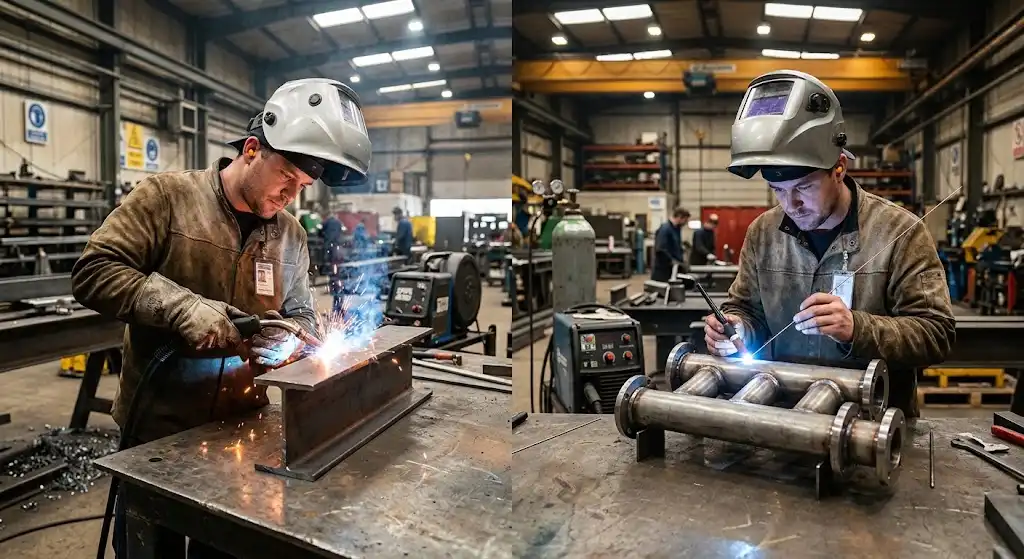
MIG vs TIG: Which Is Better for Structural Steel?
There is no universal winner.
MIG and TIG have different strengths, and professional welders consider the requirements of each project before choosing a process.
| Factor | MIG Welding | TIG Welding |
|---|---|---|
| Speed | Generally faster | Generally slower |
| Control | Good | Excellent |
| Precision | High | Very high |
| Productivity | Strong | Lower for large-volume work |
| Appearance | Good | Often very clean |
| Operator skill | Requires training | Requires advanced control |
| Best use | Efficient structural fabrication | Precision and detailed welding |
For large structural steel assemblies, MIG can offer practical productivity advantages. For detailed or highly controlled welds, TIG may be more appropriate.
In some projects, professionals may use different welding processes for different parts of the same fabrication.
Why Structural Steel Requires Professional Welding
Structural welding is not simply about making two pieces of steel stick together.
A structural connection needs to perform under the loads and conditions for which the assembly was designed. Weld size, joint preparation, material compatibility, penetration, heat control, alignment, and workmanship can all affect the final result.
OREBEND BLDRS INC describes its iron welding as producing strong structural bonds for load-bearing assemblies, supports, and framing. The company also emphasizes accuracy and engineering-focused workmanship.
For this reason, structural steel welding should be handled by qualified professionals who understand the requirements of the project.
A Structural Steel Project Example
Consider a commercial project requiring steel supports for a new platform.
The steel components must be measured, cut, positioned, and joined accurately. Some connections may prioritize production efficiency, while others may require greater control because of their location, material, or appearance.
A professional welding team reviews the project specifications before deciding how each connection should be fabricated.
MIG may be selected for appropriate structural connections where efficient production is important. TIG may be considered for portions requiring greater control or a cleaner finish.
The important point is that the welding process is selected according to the job rather than treating MIG or TIG as a universal solution.
Once welding is complete, the fabricated components can be inspected for alignment, weld quality, and compliance with applicable project requirements.
When TIG Welding Makes Sense
TIG Welding is particularly useful when precision matters more than speed.
For example, TIG may be considered when working with:
Detailed Metalwork
Some components require carefully controlled welds because of their geometry or visible location.
Stainless Steel
TIG is commonly used for stainless steel applications where appearance and control are important. OREBEND BLDRS INC provides stainless steel welding for high-visibility and high-performance environments.
Thin Materials
Greater control over heat input can make TIG useful for certain thinner materials where excessive heat could create distortion or other problems.
Visible Welds
When the finished weld will remain exposed, appearance can become an important consideration in addition to structural performance.
However, the fact that TIG offers excellent control does not mean it should automatically be used for every structural steel project.
When MIG Welding Makes Sense
MIG can be an excellent choice when productivity and efficient material deposition are priorities.
For larger fabrication projects involving repeated structural connections, the continuous wire-feed process can help experienced welders work efficiently.
MIG may be considered for:
- Structural frames
- Steel supports
- Brackets
- Commercial fabrication
- Industrial assemblies
- Repetitive welds
- Larger steel components
OREBEND BLDRS INC provides custom metal fabrication for structural assemblies, frames, brackets, enclosures, and other components, with fabrication performed to project specifications.
The Material Also Influences the Welding Process
The type of metal matters when choosing a welding process.
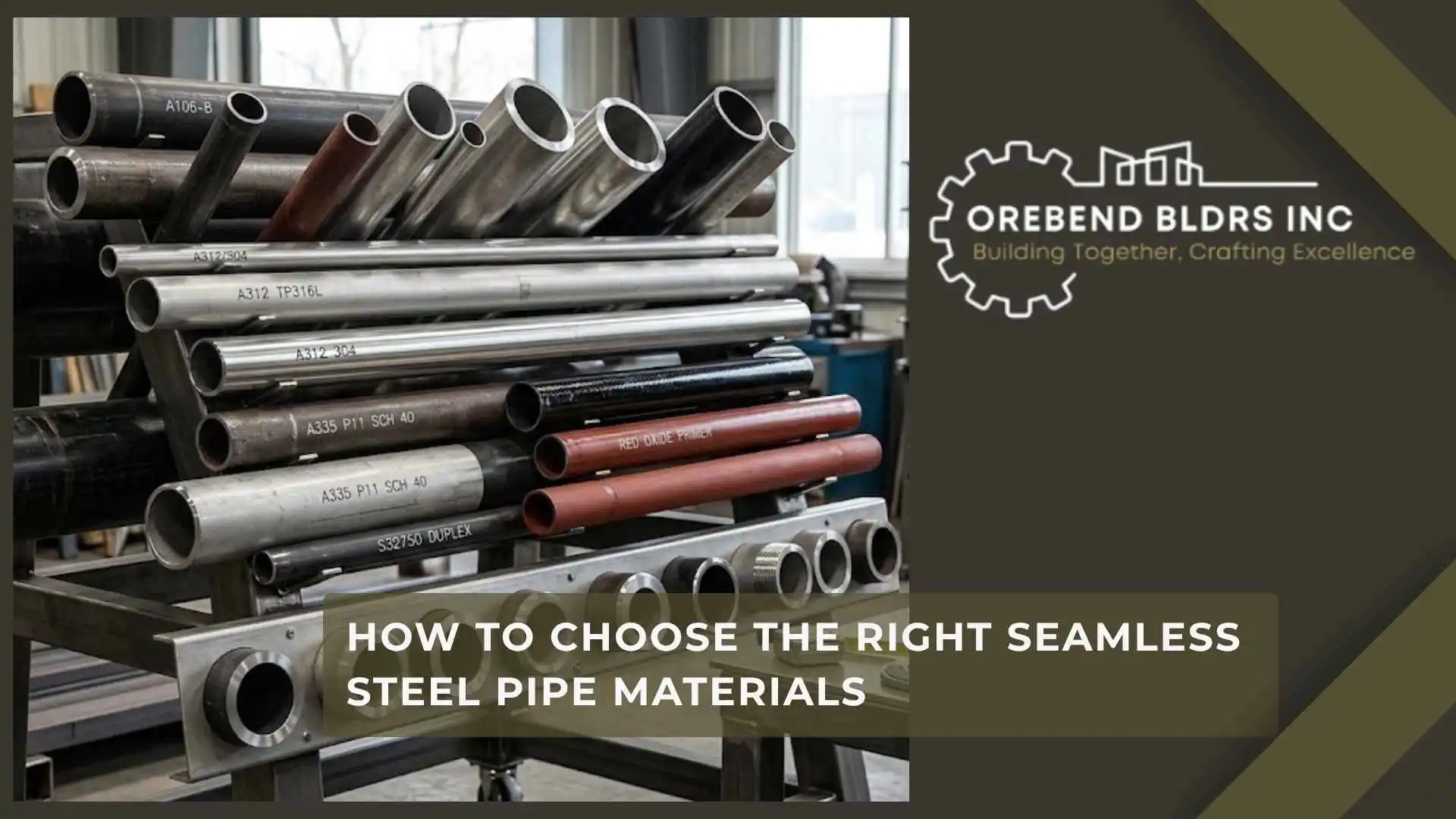
Structural projects may involve carbon steel, stainless steel, aluminum, or other materials. Each material has different characteristics that affect welding technique, heat control, preparation, and filler selection.
OREBEND BLDRS INC works with steel, stainless steel, aluminum, and other metals through its welding and fabrication services.
A professional welder therefore considers both the material and the structural requirements before selecting the appropriate process.
Why Welding Quality Matters for Structural Projects
Poor welding can create problems that go beyond appearance.
Inadequate preparation, improper technique, poor alignment, or unsuitable welding parameters can compromise the quality of a connection.
Professional structural welding focuses on:
- Correct joint preparation
- Proper alignment
- Appropriate welding process
- Controlled heat input
- Suitable filler material
- Consistent technique
- Inspection and quality control
- Compliance with project specifications
OREBEND BLDRS INC states that its welding work focuses on precision, safety, and industry standards, and the company offers certified structural welding.
Why DIY Welding Is Not Appropriate for Structural Work
Structural steel is not an area where experimentation should replace professional expertise.
A weld can look strong while still having underlying defects. Structural connections also need to be evaluated in relation to the design, material, loads, and applicable requirements.
Attempting structural welding without the required training, equipment, and qualifications can create significant safety concerns.
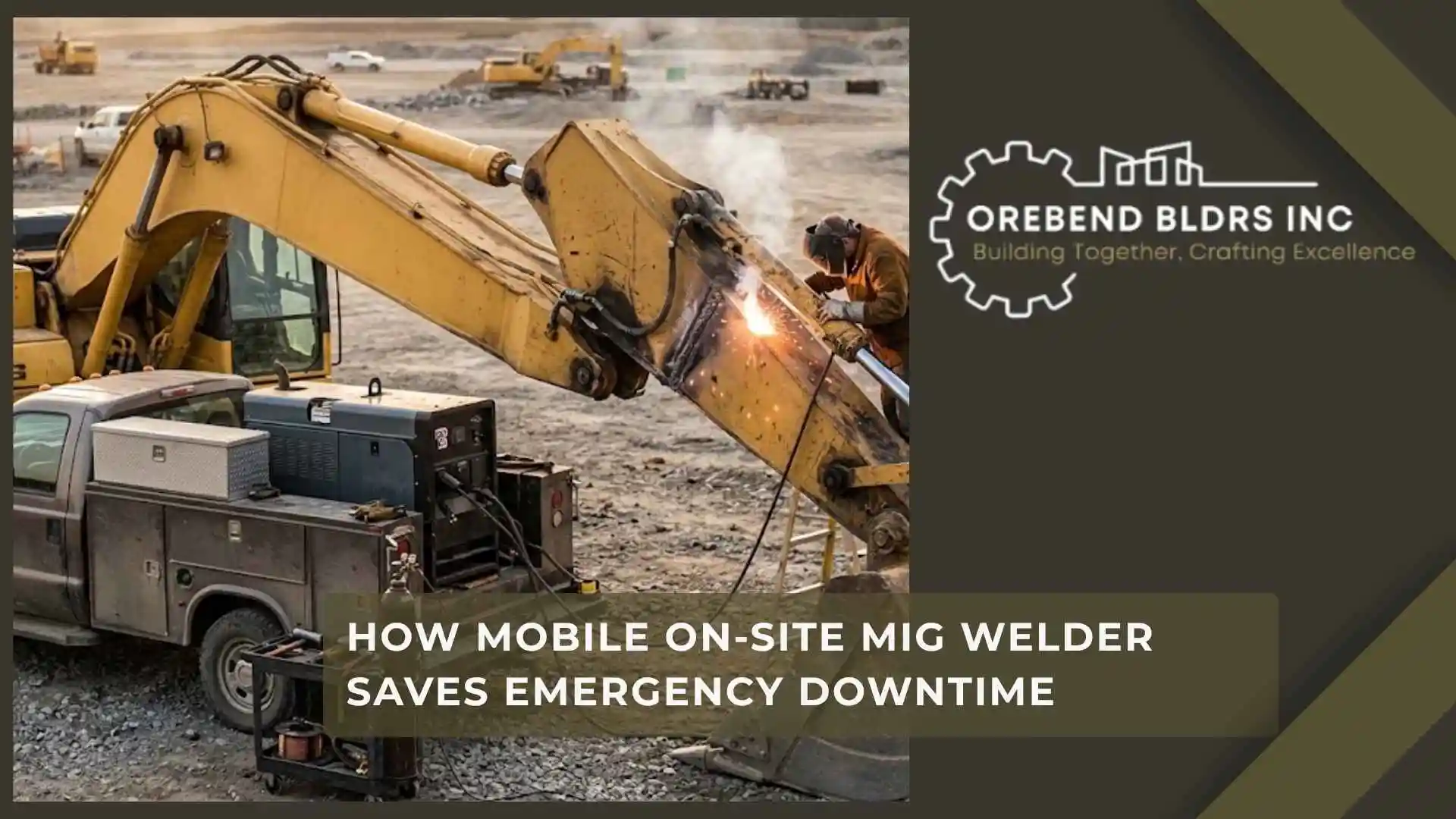
Professional welding companies have the equipment and technical knowledge required to work with structural steel properly. OREBEND BLDRS INC also offers mobile and on-site welding, allowing qualified technicians to handle complex work outside the fabrication shop when appropriate.
Professional Advantage: Choosing the Right Welding Process
The biggest advantage of working with professional welders is not simply access to welding equipment.
It is the ability to determine which welding process makes sense for the project.
A professional evaluates:
- Material – What type of steel or metal is being joined?
- Thickness – How thick are the components?
- Joint design – What type of connection is required?
- Project specifications – What requirements must the weld meet?
- Location – Is the work being performed in a shop or on-site?
- Appearance – Will the finished weld be visible?
- Production needs – Does the project require high-volume fabrication?
- Structural requirements – What level of strength and certification is required?
This evaluation helps prevent the common mistake of choosing a welding method based only on speed or appearance.
OREBEND BLDRS INC for Professional Welding and Fabrication
OREBEND BLDRS INC provides a broad range of welding and fabrication services, including MIG, TIG, Stick, certified welding, certified structural welding, aluminum fabrication, and high-pressure piping. The company also provides in-shop and mobile/on-site welding capabilities.
Its fabrication services include structural components, custom frames, supports, platforms, brackets, enclosures, piping systems, and custom metal assemblies.
This combination of welding and fabrication experience allows structural projects to be approached as complete assemblies rather than isolated welds.
Frequently Asked Questions
Is TIG Welding stronger than MIG welding?
Neither process is automatically stronger in every situation. The final strength depends on the material, joint design, welding procedure, workmanship, and project requirements.
Is MIG or TIG better for structural steel?
MIG can be advantageous for efficient structural fabrication, while TIG can provide greater control for precision applications. A professional welder should select the process based on the specific project.
Can TIG be used on structural steel?
Yes. TIG can be used for suitable structural steel applications when its characteristics and the project requirements make it appropriate.
Does OREBEND BLDRS INC provide structural welding?
Yes. OREBEND BLDRS INC lists certified structural steel welding among its capabilities, along with MIG, TIG, and Stick welding.
Does OREBEND BLDRS INC offer mobile welding?
Yes. The company provides mobile and on-site welding and fabrication services for projects that need to be completed in the field.
Get Professional Welding for Your Structural Project
Choosing between MIG and TIG is only one part of a successful structural steel project. The quality of the material preparation, fabrication, welding technique, inspection, and final assembly all matter.
OREBEND BLDRS INC provides professional welding and metal fabrication with capabilities ranging from TIG Welding and MIG welding to certified structural welding, helping commercial and industrial clients meet demanding fabrication requirements.
Whether your project involves structural supports, steel frames, custom assemblies, platforms, brackets, or other metal components, professional welding can provide the precision and reliability the work demands.
Call 415-218-6187 or request a quote from OREBEND BLDRS INC to discuss your structural welding or fabrication project.