Choosing the right seamless steel pipe materials is critical when designing a commercial or industrial piping system. In the Bay Area, facilities ranging from manufacturing plants and processing operations to commercial developments often require piping that can withstand pressure, temperature changes, corrosion, and demanding operating conditions. The wrong material can result in premature corrosion, leaks, costly repairs, or operational downtime. OREBEND BLDRS INC provides professional piping installation, fabrication, welding, and high-pressure piping services, helping project teams select and install piping systems based on the actual requirements of the application.
Why Seamless Steel Pipe Material Selection Matters
Seamless steel pipe is manufactured without a welded longitudinal seam, making it a useful option for applications where strength and pressure resistance are important. However, “seamless steel” is not one universal material.
Different grades and compositions are designed for different environments. A pipe suitable for one industrial process may be inappropriate for another because of differences in pressure, temperature, chemical exposure, flow requirements, or regulatory requirements.
Material selection should therefore begin with the operating conditions rather than simply choosing the strongest or most expensive pipe available.
OREBEND BLDRS INC works with materials including steel, stainless steel, and specialty alloys for commercial and industrial piping applications. Its fabrication team can produce custom piping components to project specifications while maintaining control over cutting, welding, and quality.
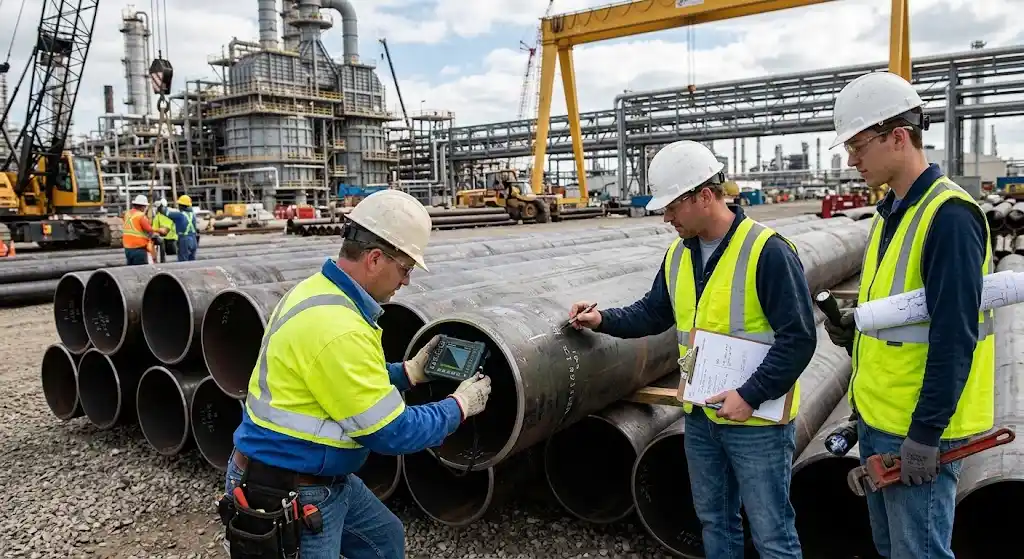
Key Factors When Choosing Seamless Steel Pipe
1. Operating Pressure
Pressure is one of the most important considerations when selecting piping materials.
High-pressure systems place greater mechanical demands on pipe walls, fittings, welds, and connections. The selected pipe must have the appropriate pressure rating and wall thickness for the system.
A professional piping contractor evaluates the complete system rather than treating the pipe as an isolated component. This includes connections, fittings, valves, supports, and installation methods.
OREBEND BLDRS INC specifically handles high-pressure piping and complex industrial installations, making professional evaluation particularly important for demanding systems.
2. Temperature Conditions
Temperature affects the mechanical properties and performance of steel.
A piping system carrying hot fluids, steam, or other high-temperature materials requires a material capable of maintaining its required performance under those conditions. Temperature cycling can also create expansion and contraction that affect pipe supports and connections.
Before selecting a material, engineers and contractors should consider both normal operating temperatures and potential temperature extremes.
3. Corrosion Exposure
Corrosion can significantly shorten the useful life of a piping system.
The surrounding environment and the material flowing through the pipe both matter. Moisture, chemicals, salts, gases, and industrial process fluids can create different corrosion risks.
Stainless steel or specialty alloys may be appropriate for applications where greater corrosion resistance is required. Carbon steel may be suitable in other environments when properly specified and protected.
OREBEND BLDRS INC’s fabrication capabilities include stainless steel, carbon steel, and specialty alloys, allowing projects to be matched with materials appropriate to their operating requirements.
Common Material Options
There is no single pipe material that works best for every project. Understanding the general characteristics of common options can help project owners communicate effectively with their piping contractor.
Carbon Steel
Carbon steel is widely used for industrial and commercial piping because of its strength, availability, and versatility.
It can be an effective choice for many applications where extreme corrosion resistance is not the primary requirement. However, the appropriate grade, wall thickness, protective measures, and installation specifications still need to be determined professionally.
Stainless Steel
Stainless steel is often selected when corrosion resistance, cleanliness, or demanding environmental conditions are important.
It is commonly considered for applications where ordinary carbon steel may be more vulnerable to corrosion. Different stainless grades have different properties, so choosing “stainless steel” alone is not enough to determine whether a particular pipe is appropriate.
Specialty Alloys
Some industrial systems require materials with specific resistance to heat, chemicals, pressure, or corrosion. Specialty alloys can provide characteristics that standard steel cannot.
These materials can be more expensive, making professional material selection especially important. The objective should be to choose a material that meets the system’s requirements without unnecessarily increasing project costs.
Why Professional Piping Expertise Is Essential
Selecting pipe material from a catalog may appear straightforward, but professional piping involves much more than identifying a suitable metal.
The piping system must be designed and installed as an integrated assembly. Pipe dimensions, fittings, welding procedures, supports, expansion, pressure requirements, and connections all influence system performance.
OREBEND BLDRS INC follows project plans, safety requirements, and applicable codes while coordinating its installation work with other trades. Its team handles both new construction and retrofit projects and focuses on organized installation designed to minimize downtime.
Precision Fabrication
Custom fabrication can improve the fit and reliability of piping components.
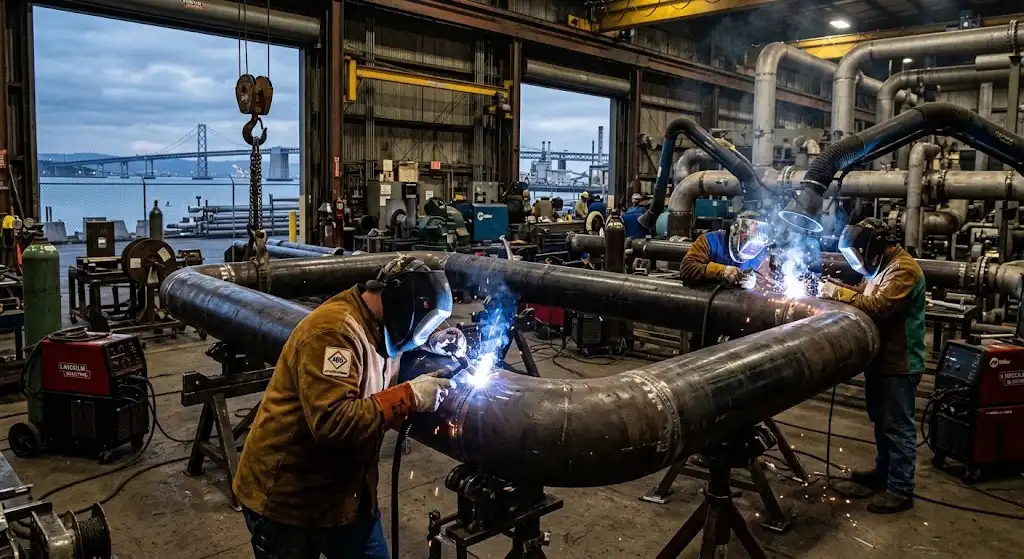
OREBEND BLDRS INC fabricates piping components in-house using advanced tools and established techniques. Its capabilities include accurate cutting and welding across stainless steel, carbon steel, and specialty alloys.
Professional Welding
The quality of a piping system depends heavily on its joints.
Poorly executed welds can create leaks, weak points, or future maintenance problems. OREBEND BLDRS INC provides MIG, TIG, Stick, certified welding, certified structural steel welding, and high-pressure piping services.
Code and Safety Compliance
Industrial piping can carry materials under significant pressure or at elevated temperatures. Installation must therefore account for applicable safety requirements and codes.
Professional contractors understand that material selection and installation are connected. Choosing a theoretically suitable pipe does not help if the completed system fails to meet the project’s engineering or safety requirements.
A Real-World Industrial Piping Scenario
Consider a Bay Area processing facility preparing to replace part of an aging piping system. The existing system has experienced corrosion and maintenance problems, and the facility cannot afford a lengthy shutdown.
Instead of simply replacing the old pipe with an identical material, the project team evaluates operating pressure, temperature, fluid characteristics, corrosion exposure, and the existing system layout.
OREBEND BLDRS INC can support this type of project through professional piping fabrication and installation. Custom sections can be fabricated to the required specifications before installation, helping improve fit and reduce unnecessary onsite work.
The installation team coordinates with the broader project schedule and other trades, allowing the piping replacement to be completed efficiently while maintaining attention to safety and quality. OREBEND BLDRS INC states that its industrial experience includes demanding environments such as paper mills and processing plants, including large piping tie-ins, structural repairs, and shutdown work.
The result is not simply a new pipe. It is a piping solution selected and installed around the facility’s actual operating requirements.
Questions to Ask Before Selecting Pipe Materials
Before approving a seamless steel pipe material, project owners and managers should have clear answers to several questions:
- What pressure will the pipe operate under?
- What are the normal and maximum temperatures?
- What fluid or gas will travel through the system?
- Is corrosion a major concern?
- What pipe diameter and wall thickness are required?
- What codes and safety standards apply?
- How will the pipe be connected and welded?
- Does the existing system require a retrofit or complete replacement?
- Can sections be fabricated off-site to reduce installation time?
Answering these questions helps prevent material mismatches and unnecessary rework.
Why Choose OREBEND BLDRS INC?
OREBEND BLDRS INC provides commercial and industrial piping installation supported by pipe fitting, welding, metal fabrication, and specialized piping experience. The company handles projects ranging from straightforward layouts to complex multi-system installations and emphasizes precise plans, safety requirements, code compliance, and coordination with other trades.
Its in-house fabrication capabilities also allow the company to work with stainless steel, carbon steel, and specialty alloys while maintaining closer control over fabrication quality.
For projects where reliability, pressure performance, corrosion resistance, and installation precision matter, professional material selection is an important first step.
Frequently Asked Questions
Is seamless steel pipe always better than welded pipe?
Not necessarily. The best choice depends on the application’s pressure, temperature, material requirements, dimensions, cost, and applicable standards. A professional should evaluate the complete system before making the selection.
What is the best steel for high-pressure piping?
There is no universal answer. The appropriate grade depends on pressure, temperature, fluid characteristics, corrosion exposure, required wall thickness, and applicable engineering standards.
Should I choose carbon steel or stainless steel?
Carbon steel may be suitable for many applications where corrosion is manageable, while stainless steel can be advantageous where corrosion resistance or other specialized properties are important. Professional evaluation is recommended before selecting either material.
Can seamless steel pipe be custom fabricated?
Yes. Pipe sections can be cut, fitted, welded, and fabricated to project specifications. OREBEND BLDRS INC provides in-house piping fabrication using multiple steel and alloy materials.
Get Professional Piping Guidance
Choosing the right seamless steel pipe materials is ultimately about matching the material to the demands of the system. Pressure, temperature, corrosion, fluid characteristics, installation conditions, and code requirements all need to be considered before fabrication begins.
OREBEND BLDRS INC combines piping installation, fabrication, welding, and industrial project experience to deliver piping systems designed around specific project requirements. If you’re planning a new installation, retrofit, high-pressure piping project, or custom fabrication job, call (415) 218-6187 to discuss your requirements and request a quote.